2026
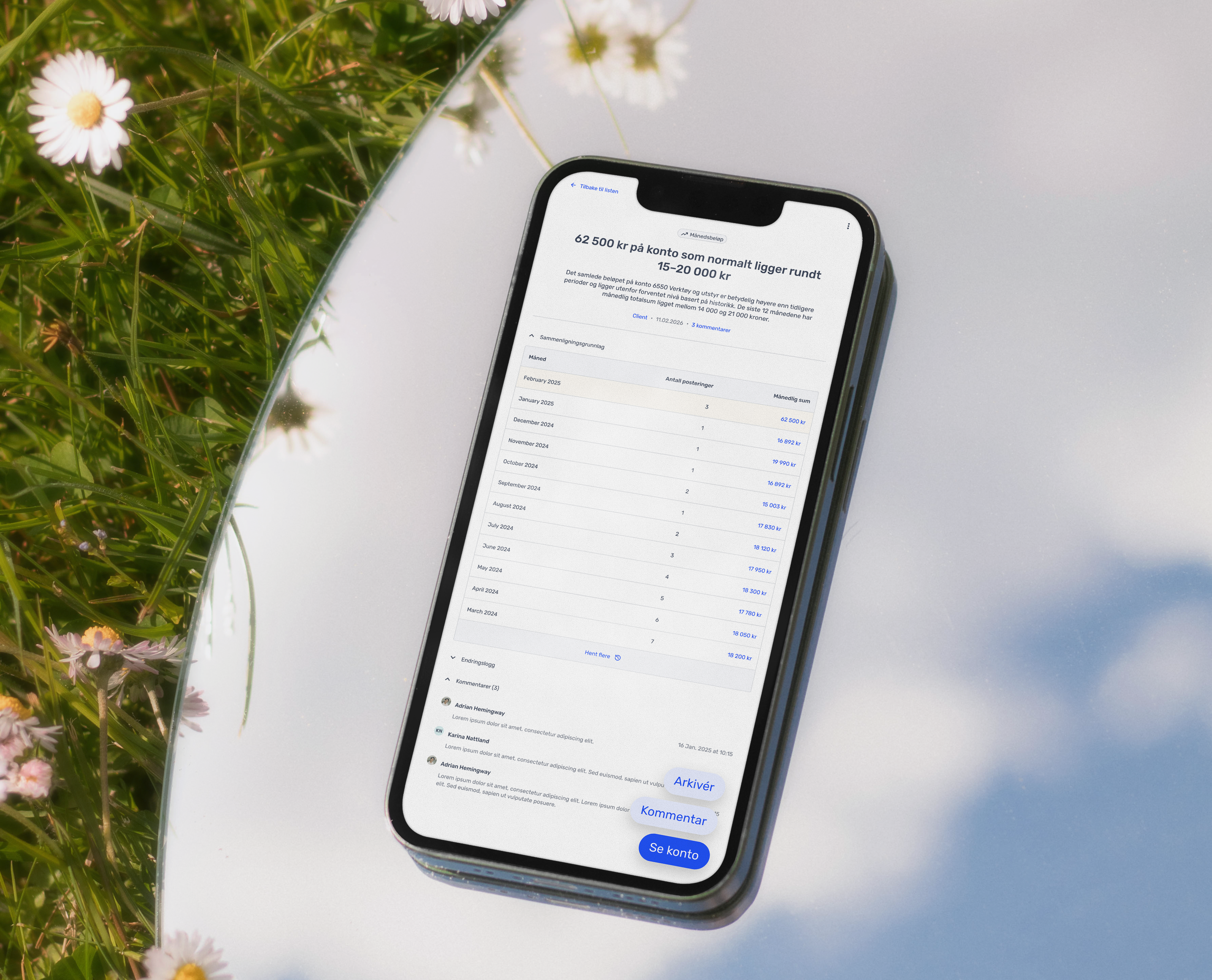
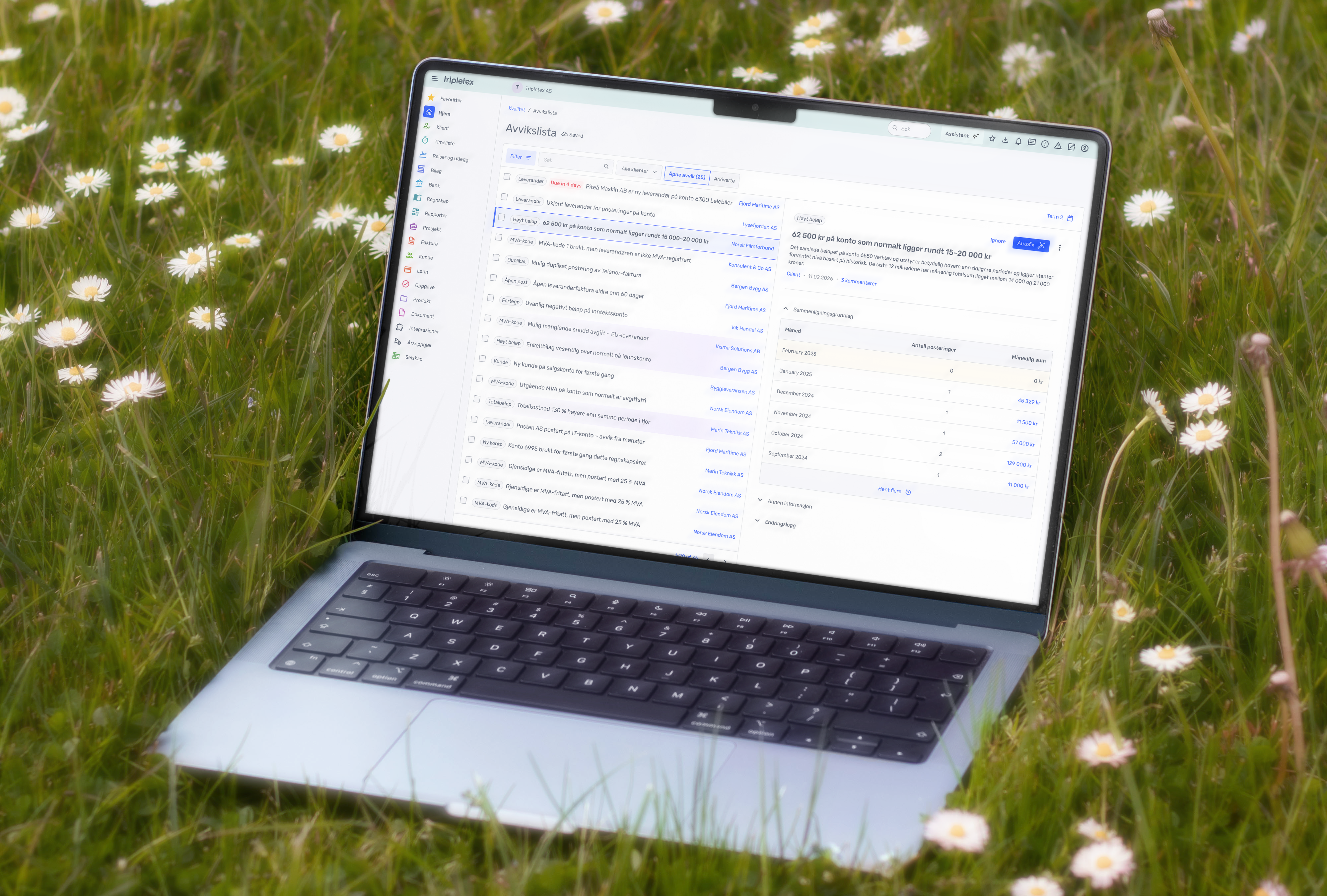
The amount of postings made through the year, make irregularities hard to find. Using machine learning, we were able to detect specific and relevant anomalies, making quality assurance easier and at the same time providing useful insights about routines and changes.
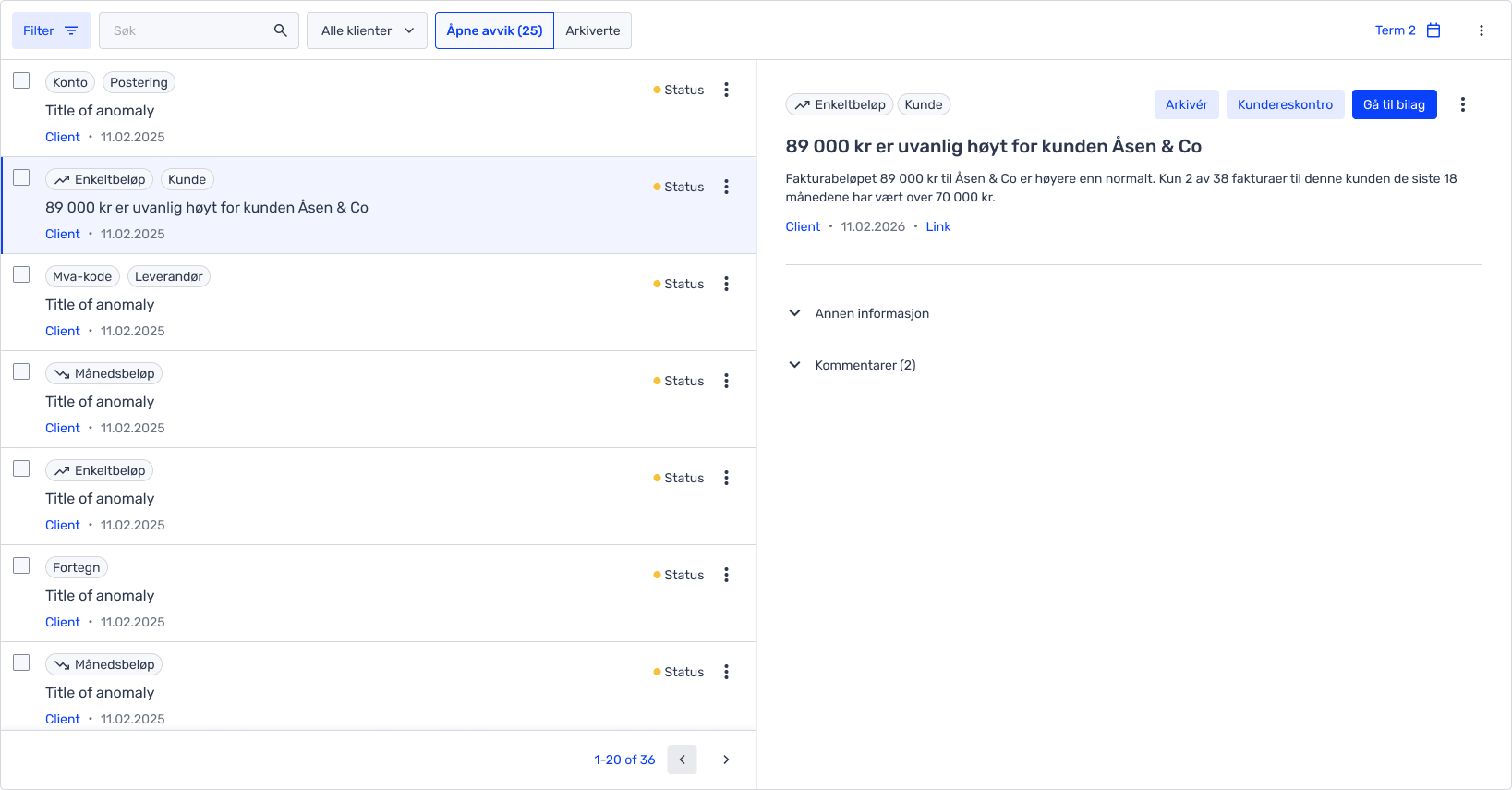
From looking through the books manually,
maybe finding something,
to a curated list of flagged postings to check out,
document or dive deeper into.
A prototype was tested early on real users' data. Then, we maintained contact with a small group of testers over a few months. Then, the GUI was introduced and we opened the pilot to more accountants. All the time, we've balanced the line between necessary and nice to have – to ensure good test data and maintain a reasonable scope.
This pattern was new for the design system, so I worked a lot on documenting and testing different flows, pedagogy and legibility. This resulted in a reusable pattern that scales for loads of different content. This was then documented into the system.
Designing for unknown content was challenging, and copy, filtering and searchability became key design tasks for ensuring legibility. Labels, header, layout, descriptions and actions are all anomaly-dependent, and vary based on the underlying account element (posting, sum or otherwise).